
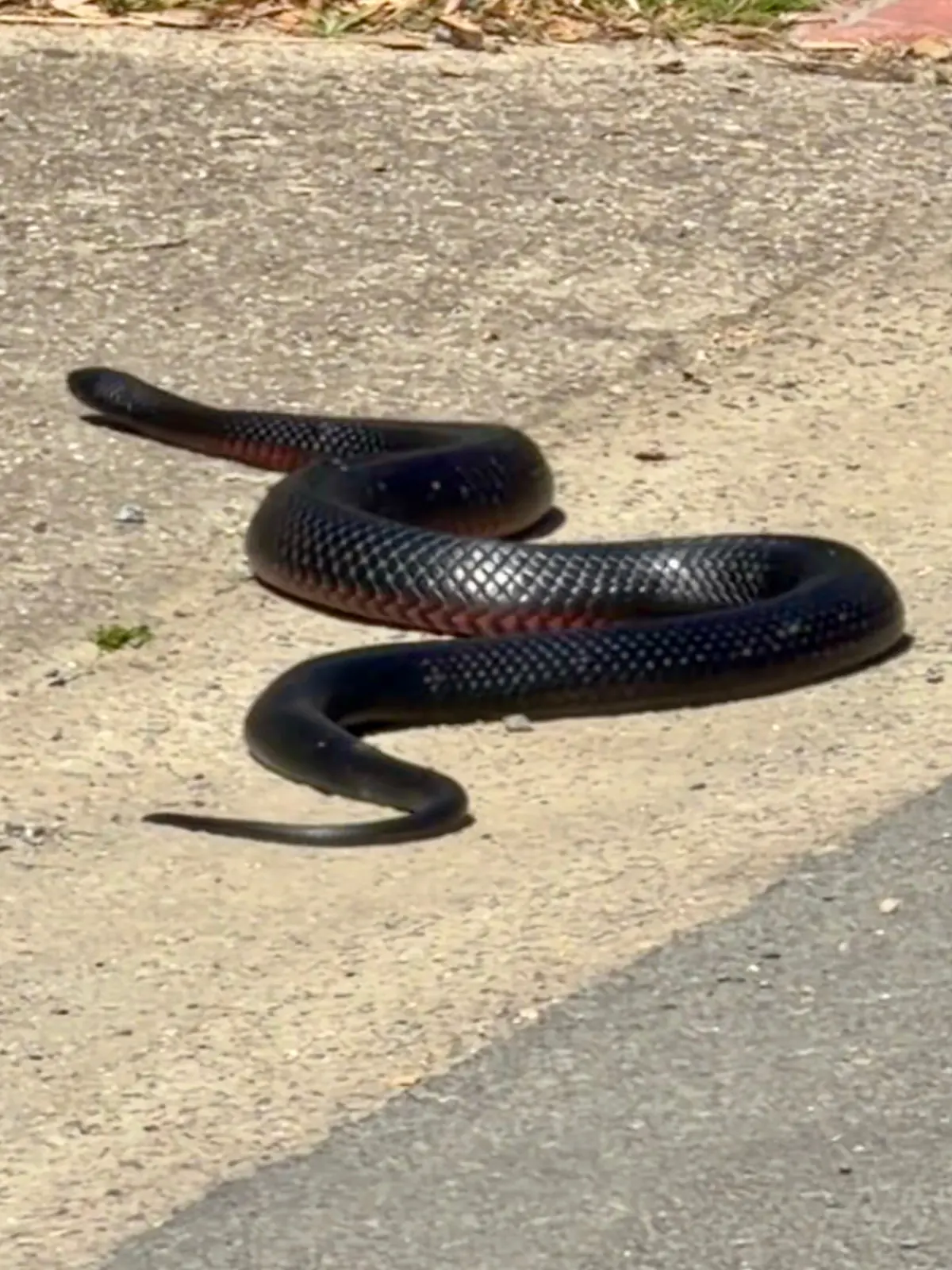
Photo supplied by Wollongong Snake Catchers.
Local status
The signature snake of the Illawarra and the one on our crest. Found from the escarpment creeks to suburban backyards near water.
- Typical size
- Usually 1.2–1.5 m; large individuals approach 2 m.
- Venom
- Venomous — any bite is a medical emergency
- Local status
- Confirmed local species
Identification
- Uniformly glossy black back and head, sometimes with a paler brown snout.
- Bright red, crimson or pink lower sides, fading to a paler pink or cream belly.
- Robust body with smooth, shiny scales that catch the light.
- Can flatten its neck into a broad hood when it feels threatened.
Colouring & markings
Jet black upper body with a vivid red to salmon-pink stripe along the lower flanks. The underside of the tail is black.
Habitat
Strongly tied to water: creeks, drainage lines, dams, swamps, lagoons and moist gullies. Hunts frogs, so anywhere frogs are calling is good red-belly country.
Around Wollongong
Common along the creek lines that run from the escarpment to the sea — around Fairy Creek, Towradgi Creek, Hewitts Creek, Mullet Creek and the Lake Illawarra foreshore — and in gardens, garages and pool areas backing onto bush or stormwater channels.
Behaviour & temperament
Generally retiring. Given space, a red-belly will almost always move off. When cornered it may flatten its body and hiss as a warning. Active by day, often basking on warm paths and lawns in spring.
Venom classification
Venomous — any bite is a medical emergency. Regardless of species, never handle a snake. If anyone is bitten, call 000 and apply a pressure immobilisation bandage.
If you encounter one
- 01Move people and pets away calmly. Keep at least a few metres between you and the snake.
- 02If it is safe to do so, keep watching it from a distance so you can tell the catcher where it went.
- 03Never try to catch, corner, hit or kill it. Most bites happen during these attempts.
- 04Call 0428 458 856 and describe where it is and what it looks like.
When to call a professional
Call whenever one is inside a house, garage or shed, near a pool, in a child play area, or sheltering somewhere it may stay — under decks, in wood piles or behind stored items.
Often confused with
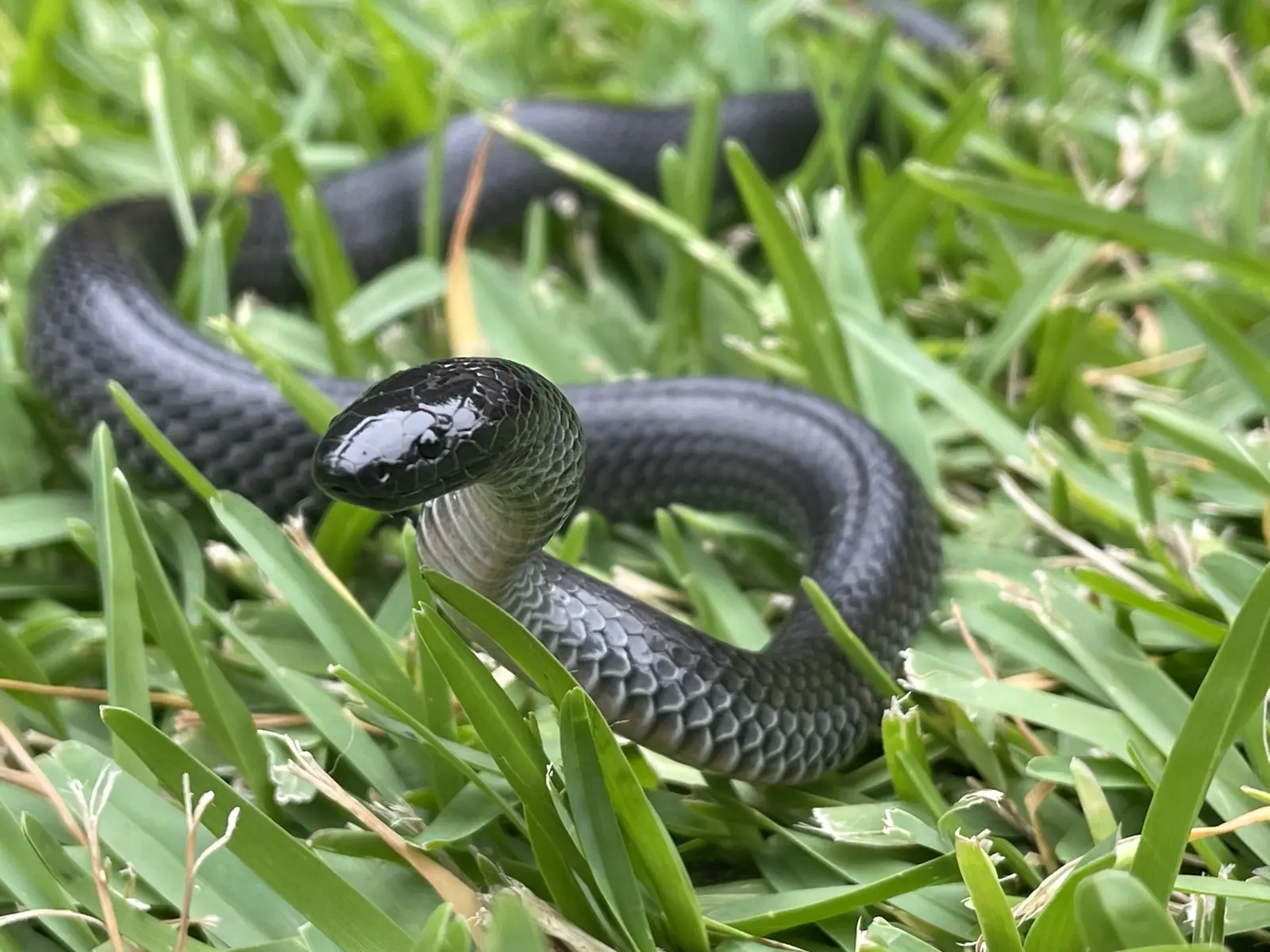
Small-Eyed Snake
Cryptophis nigrescens
Glossy black with a pink or cream belly and tiny dark eyes. Often confused with a young red-bellied black snake.
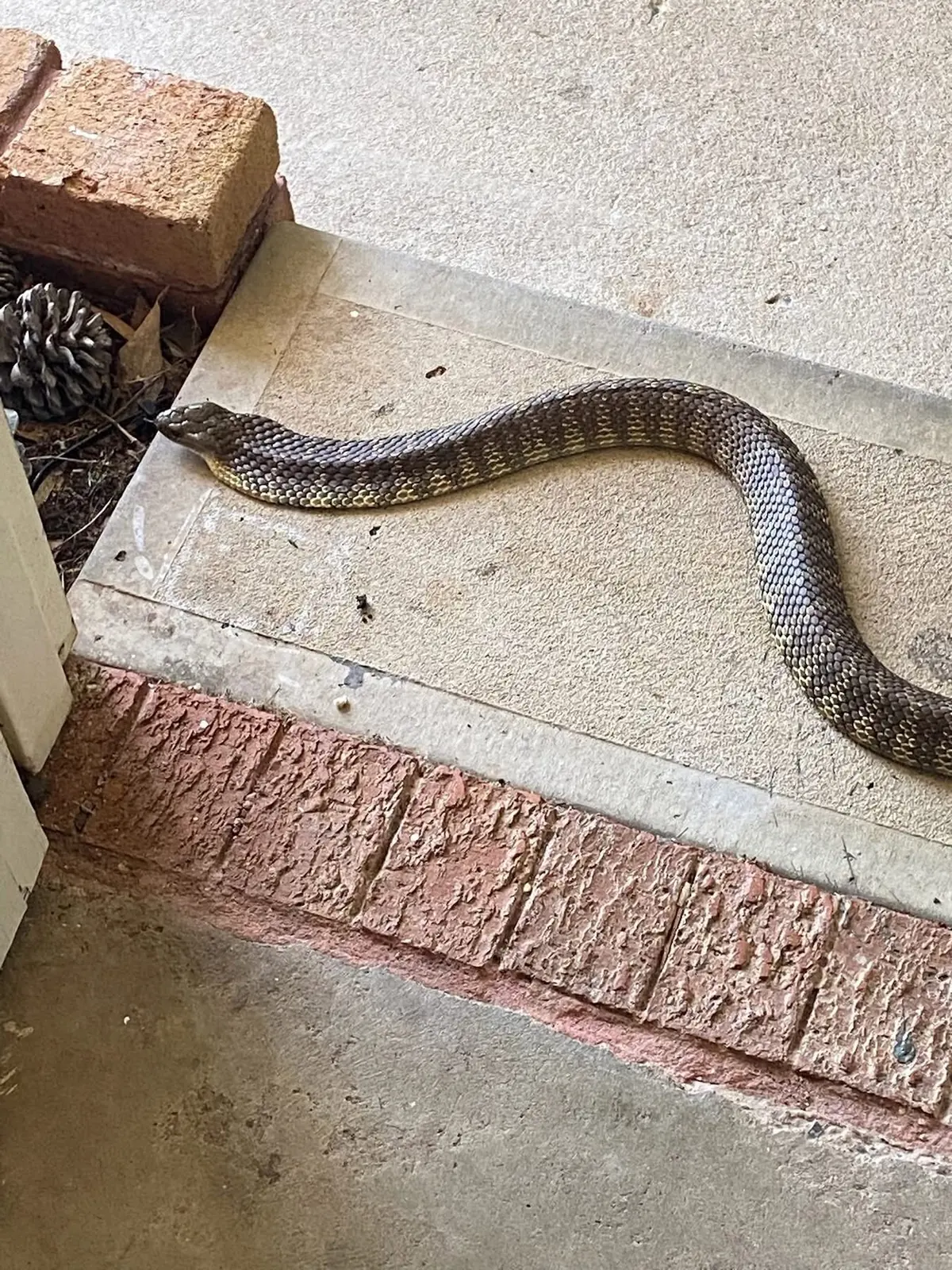
Eastern Tiger Snake
Notechis scutatus
A heavy-bodied snake that may be banded or plain. Highly venomous, with a habit of flattening its neck when threatened.
Frequently asked questions
Are red-bellied black snakes aggressive?
No. They are among the more placid venomous snakes and prefer to retreat. Problems arise when people try to move or kill them. Keep your distance and call for help.
Why do I keep seeing red-bellies near my creek?
They follow frogs. Properties near creeks, dams, drains and wet gullies are natural red-belly habitat, especially in warmer months.
Is a red-bellied black snake bite fatal?
Deaths are rare, but bites can cause serious illness and must be treated as a medical emergency. Apply a pressure immobilisation bandage, keep still and call 000.
Related articles
- The Most Common Snakes Found Around Wollongong
- Red-Bellied Black Snakes in Wollongong: What You Need to Know
- Eastern Brown Snakes Around the Illawarra
- Are Red-Bellied Black Snakes Dangerous?
- What to Do If You Find a Snake in Your Backyard
- Why Wollongong Homes Experience Snake Encounters
- Why Snakes Come Into Houses
- How to Snake-Proof Your Backyard
- Snakes Around Swimming Pools: What Homeowners Should Know
- What Happens During a Professional Snake Relocation?
- What to Do If Your Dog Encounters a Snake
- What to Do If Your Cat Encounters a Snake
- Why You Should Never Attempt to Catch a Snake Yourself
- When Should You Call a Professional Snake Catcher?
- What Time of Year Are Snakes Most Active in NSW?
- Snakes Around Wollongong’s Bushland and Escarpment
- Snakes Around Rural Properties and Acreage
- Snake Encounters Around Wollongong’s Beaches and Coastal Areas
- How to Identify Common Australian Snakes