
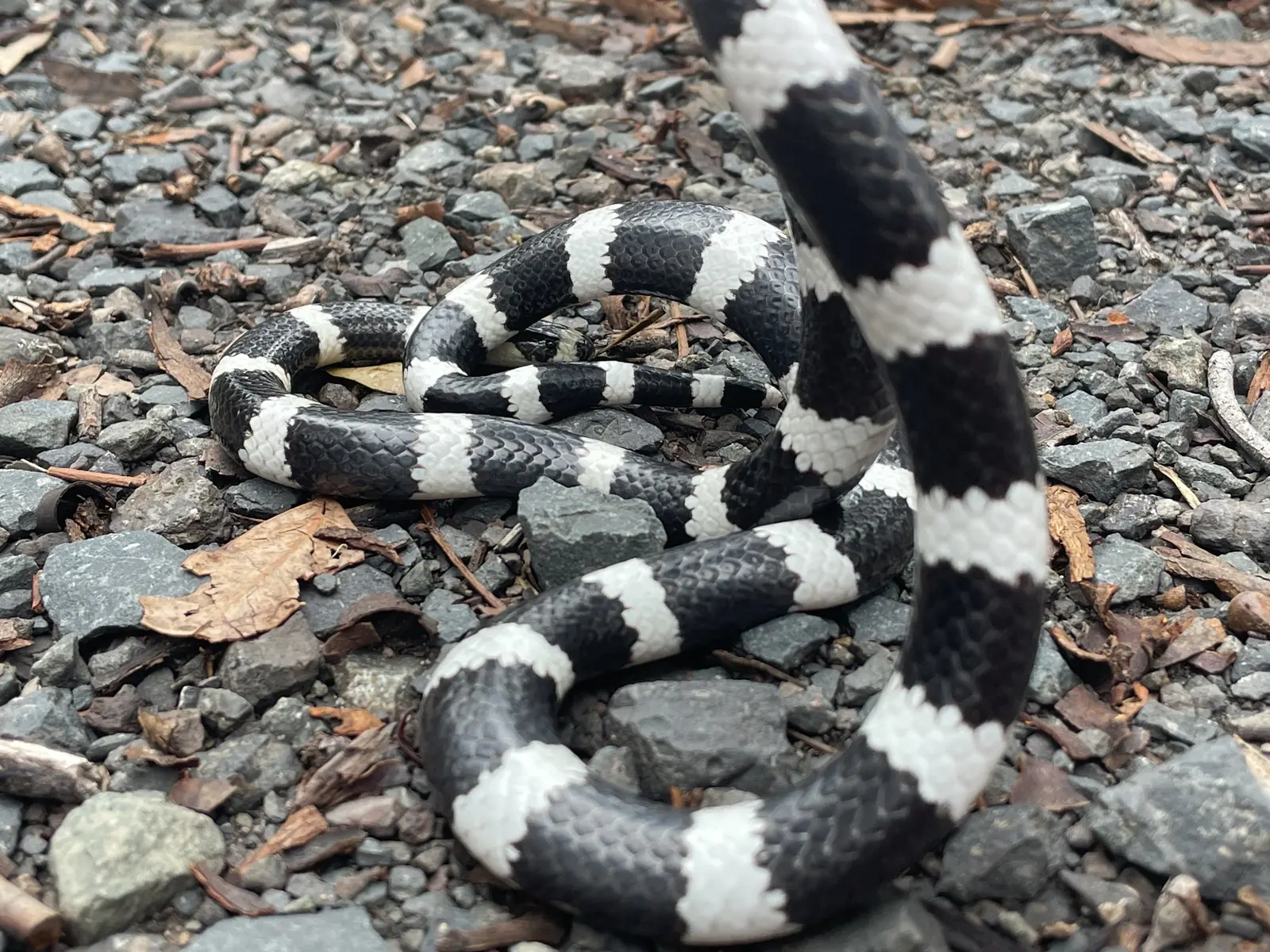
Photo supplied by Wollongong Snake Catchers.
Local status
The Australian Faunal Directory includes bandy-bandies in the Sydney Basin bioregion, but a broad bioregion is not proof of a local Wollongong record. This species is rarely seen because it spends much of its time underground.
- Typical size
- Usually 40–60 cm.
- Venom
- Venomous — keep well clear and never handle
- Local status
- Local status unconfirmed
Identification
- Distinctive alternating black and white or cream bands around the body.
- Narrow, rounded head that is not sharply distinct from the body.
- A cylindrical body adapted for moving through soil and loose ground cover.
Colouring & markings
Bold black-and-white banding continues along the body and tail; band width and pattern vary between individuals.
Habitat
Mostly underground in loose soils, woodland and forest; may be found beneath logs or other ground cover.
Around Wollongong
A burrowing species recorded across a wide range that includes the Sydney Basin. It is rarely seen, and the sources checked do not establish how often it occurs around Wollongong.
Behaviour & temperament
Nocturnal and fossorial, feeding mainly on blind snakes. When threatened it may raise loops of its body while keeping its head low; do not approach to watch or photograph this display.
Venom classification
Venomous — keep well clear and never handle. Regardless of species, never handle a snake. If anyone is bitten, call 000 and apply a pressure immobilisation bandage.
If you encounter one
- 01Move people and pets away calmly. Keep at least a few metres between you and the snake.
- 02If it is safe to do so, keep watching it from a distance so you can tell the catcher where it went.
- 03Never try to catch, corner, hit or kill it. Most bites happen during these attempts.
- 04Call 0428 458 856 and describe where it is and what it looks like.
When to call a professional
Call if one is near people or pets, or if it needs to be moved from a frequently used area. Keep well clear; do not attempt to pick it up.
Often confused with
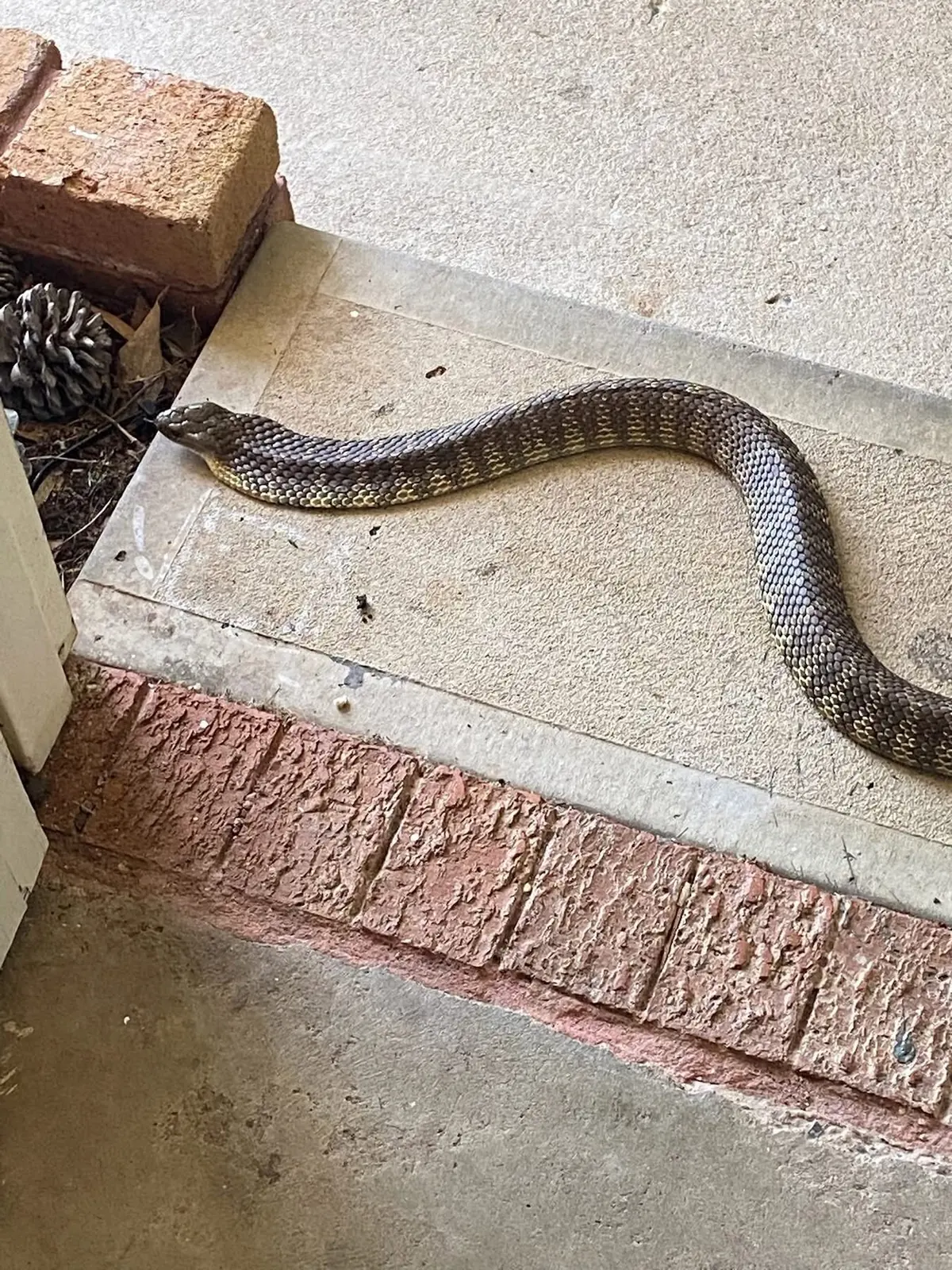
Eastern Tiger Snake
Notechis scutatus
A heavy-bodied snake that may be banded or plain. Highly venomous, with a habit of flattening its neck when threatened.
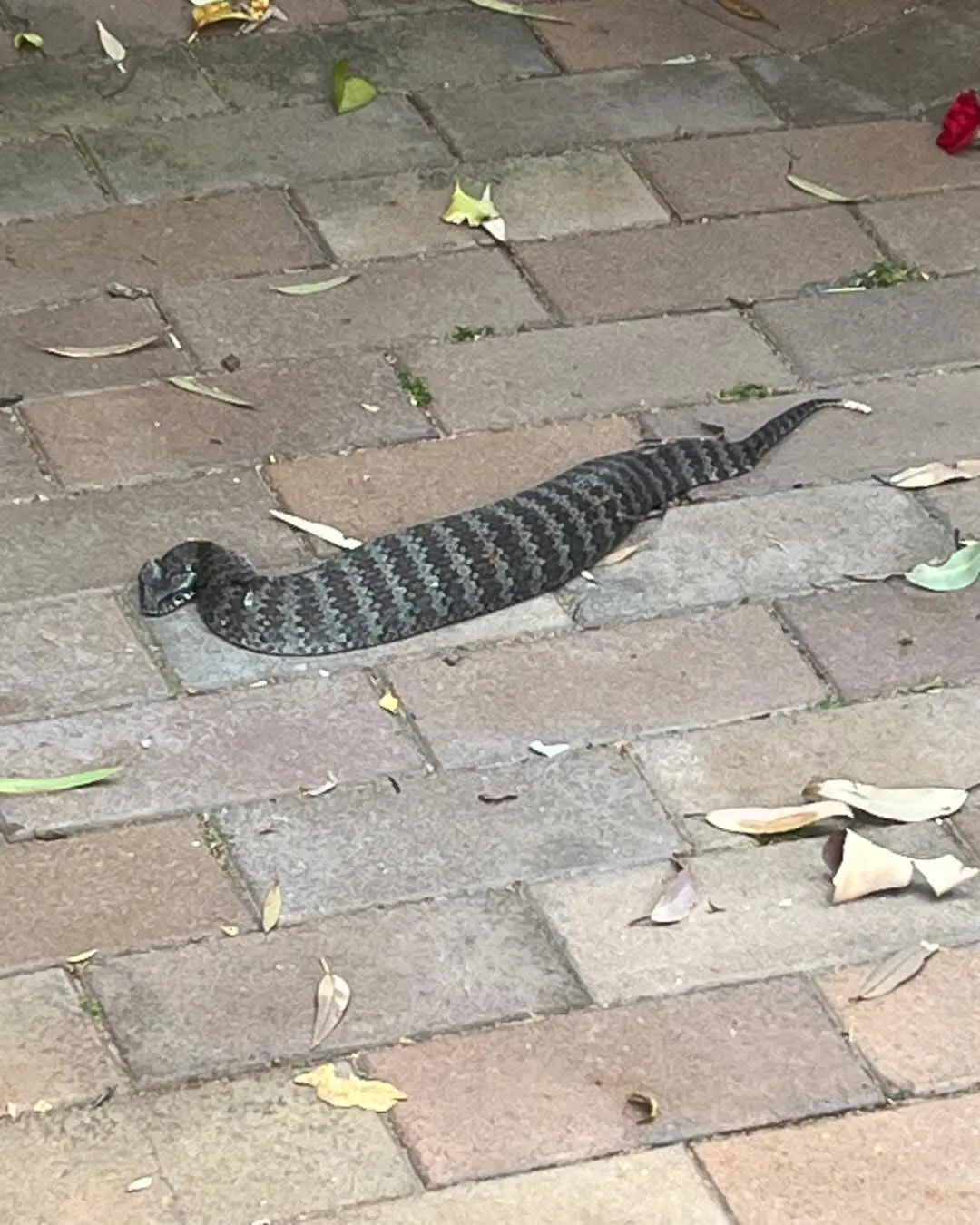
Common Death Adder
Acanthophis antarcticus
A short, stout, well-camouflaged snake with a broad triangular head and a thin tail. It may remain still among leaf litter rather than flee.
Frequently asked questions
Is a bandy-bandy snake venomous?
Yes. It is a member of the front-fanged elapid family. Leave it alone, keep people and pets back, and call a professional if it is in a place that needs to be used.
Why is a bandy-bandy rarely seen?
It spends much of its time underground and is mainly active at night, so it is less often encountered than surface-active snakes.