
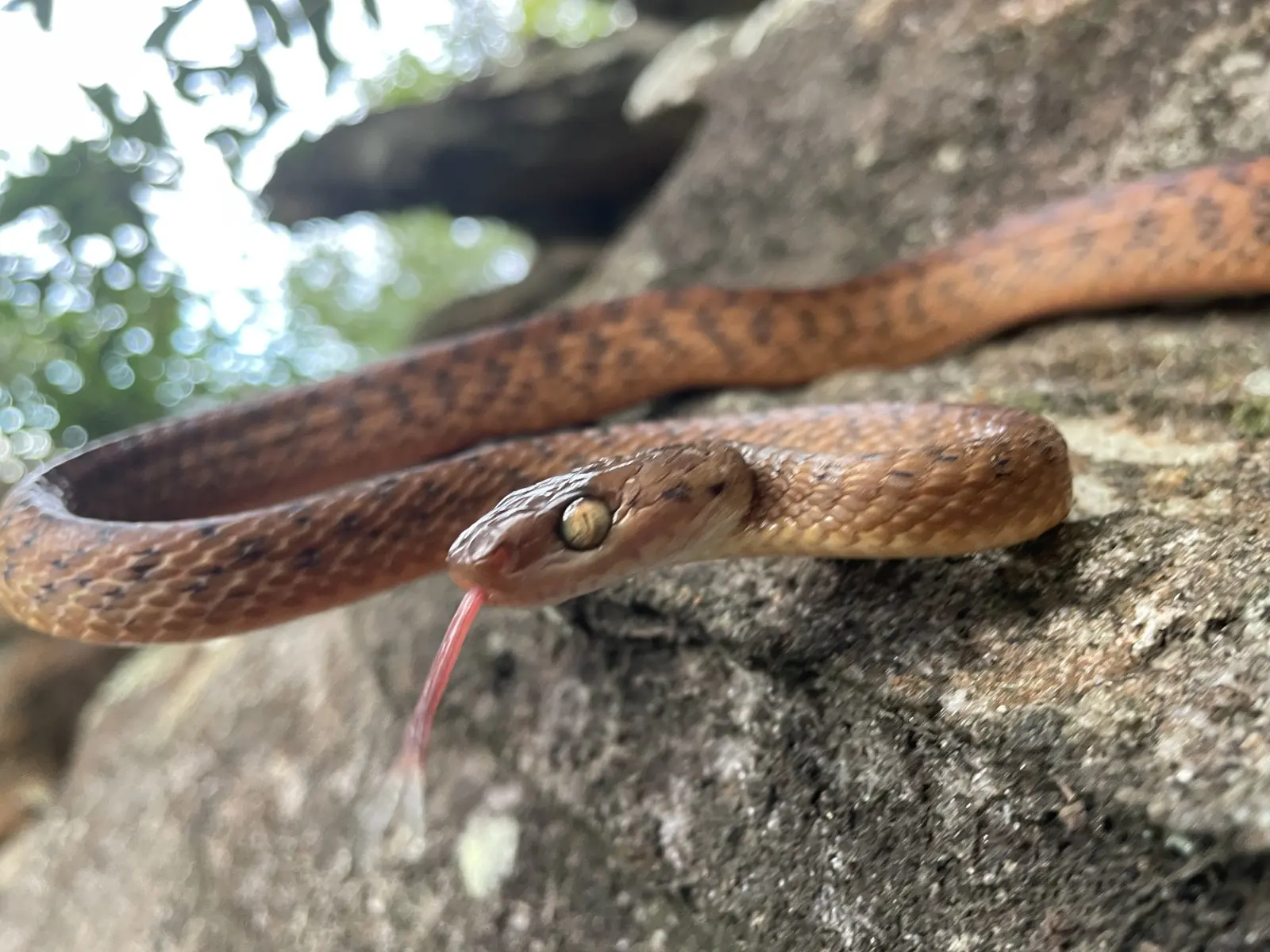
Photo supplied by Wollongong Snake Catchers.
Local status
The Australian Faunal Directory includes the species in the broad Sydney Basin bioregion. That does not establish how often it occurs in the Illawarra, so this guide does not describe it as a common local snake.
- Typical size
- Usually around 1.5 m; can exceed 2 m.
- Venom
- Rear-fanged and mildly venomous — do not handle
- Local status
- Local status unconfirmed
Identification
- Slender body, narrow neck and a noticeably broader, bulbous head.
- Large eyes with vertical pupils, especially noticeable in close photographs.
- Colour ranges from pale tan or reddish brown to darker banded patterns; the belly may be orange or salmon.
Colouring & markings
The pattern varies considerably: some are fairly plain, while others show darker bands or cross-markings. Colour alone is not a safe way to identify a snake.
Habitat
Trees and other elevated shelter, forest edges, woodland and buildings with access to roof spaces.
Around Wollongong
The species is listed in the Sydney Basin bioregion by the Australian Faunal Directory, but this broad distribution is not a record for a particular Illawarra suburb. A snake seen locally should be identified from a safe distance.
Behaviour & temperament
Mostly nocturnal and an agile climber. Its rear fangs and mild venom are not a reason to approach; it may bite if cornered or grabbed.
Venom classification
Rear-fanged and mildly venomous — do not handle. Regardless of species, never handle a snake. If anyone is bitten, call 000 and apply a pressure immobilisation bandage.
If you encounter one
- 01Move people and pets away calmly. Keep at least a few metres between you and the snake.
- 02If it is safe to do so, keep watching it from a distance so you can tell the catcher where it went.
- 03Never try to catch, corner, hit or kill it. Most bites happen during these attempts.
- 04Call 0428 458 856 and describe where it is and what it looks like.
When to call a professional
Call if one is inside a roof, home or shed, or if people or pets cannot safely avoid it. Do not climb or reach into a roof space to look for it.
Often confused with
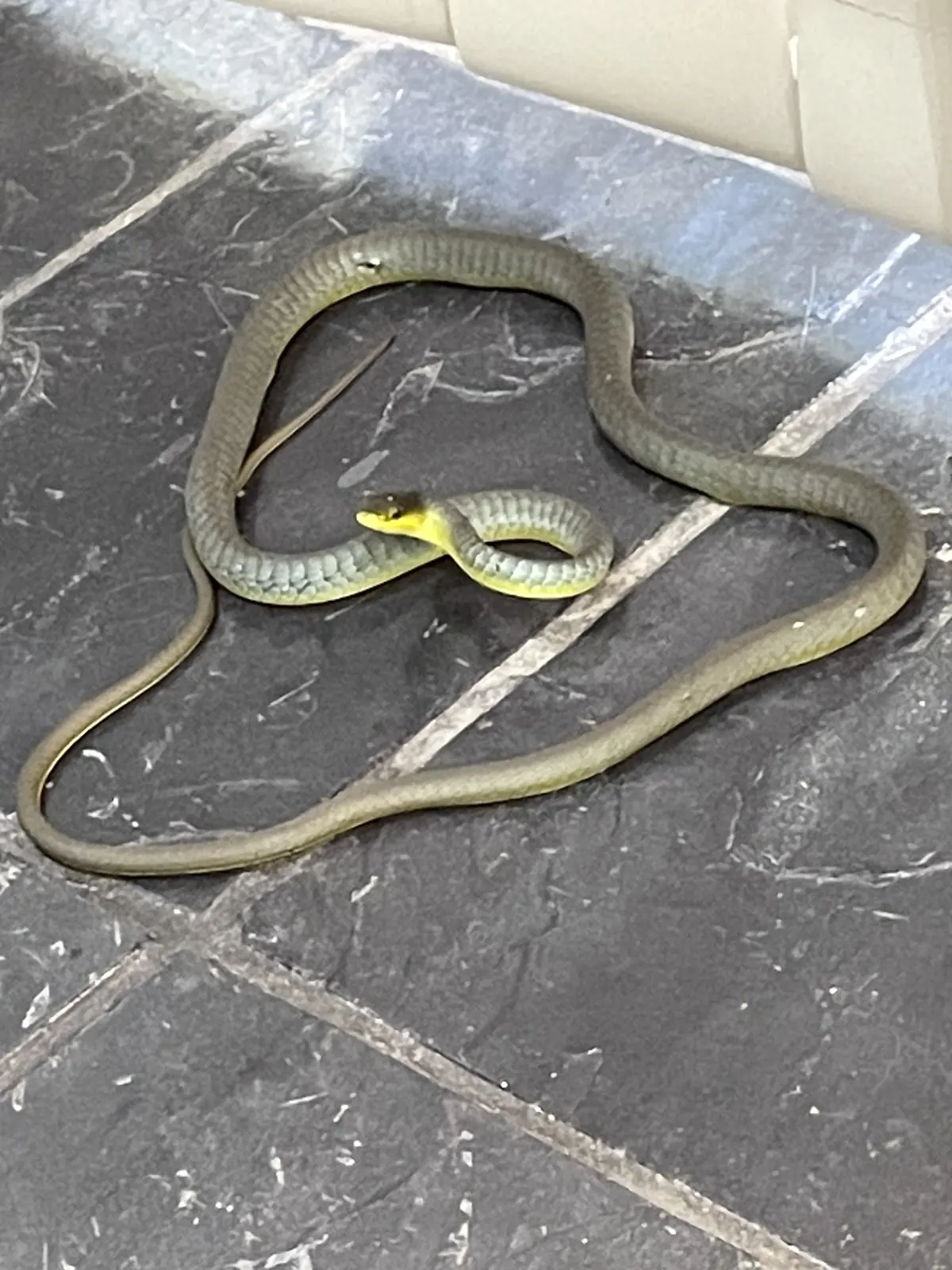
Common Tree Snake
Dendrelaphis punctulatus
A long, whip-thin climber in olive, black, bronze or green with a bright yellow throat and belly, and large eyes.
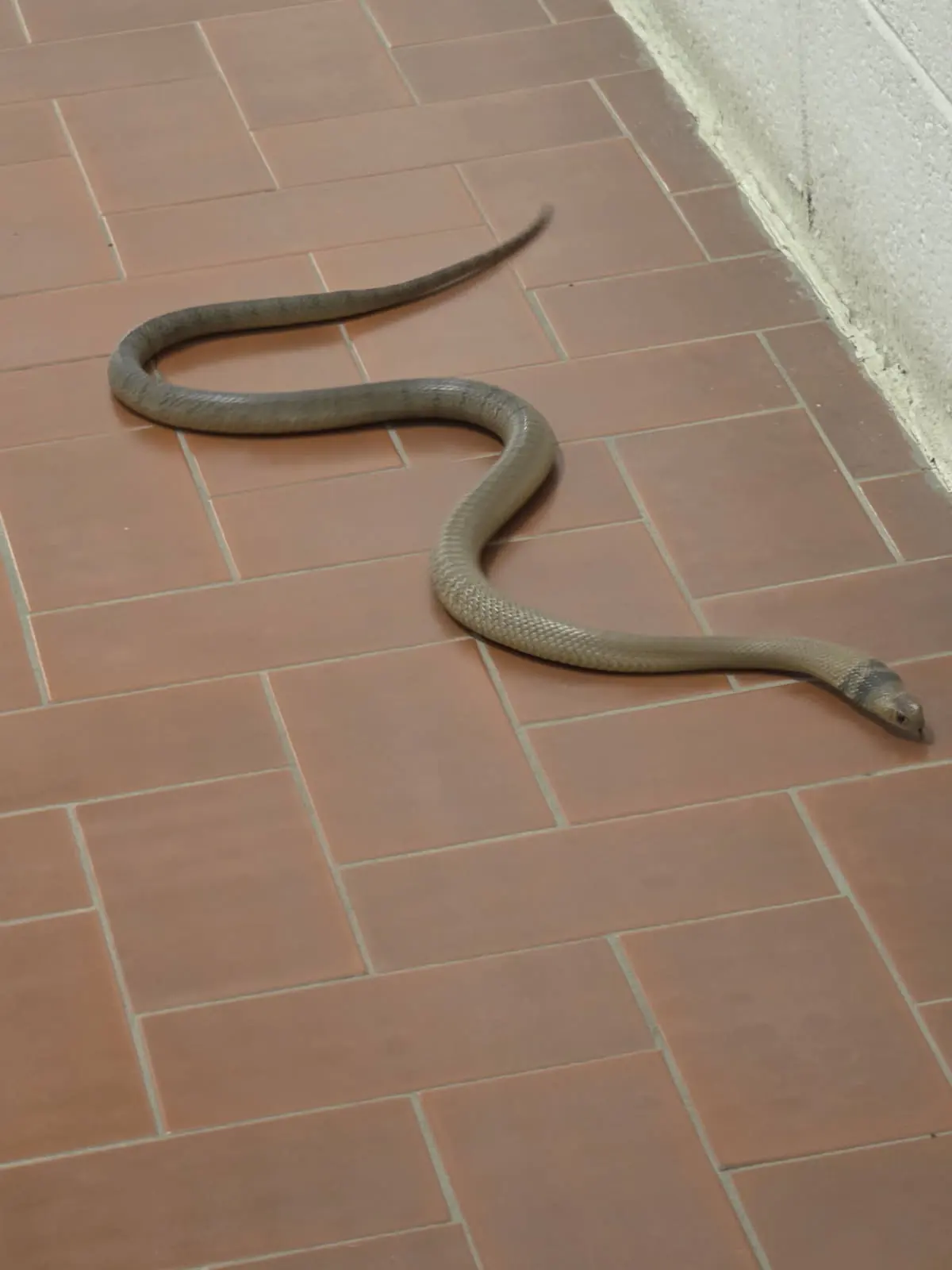
Eastern Brown Snake
Pseudonaja textilis
A slender, fast snake whose colour ranges from light tan to almost black. Highly venomous and nervous when cornered.
Frequently asked questions
Is a brown tree snake the same as an eastern brown snake?
No. They are different species. A brown tree snake is a slender climber with large eyes and rear fangs; an eastern brown is a dangerously venomous front-fanged snake. Do not approach either to identify it.
Can brown tree snakes climb into roof spaces?
Yes. They are capable climbers and may shelter above ground. If one is in a roof or building, keep away and call a professional.