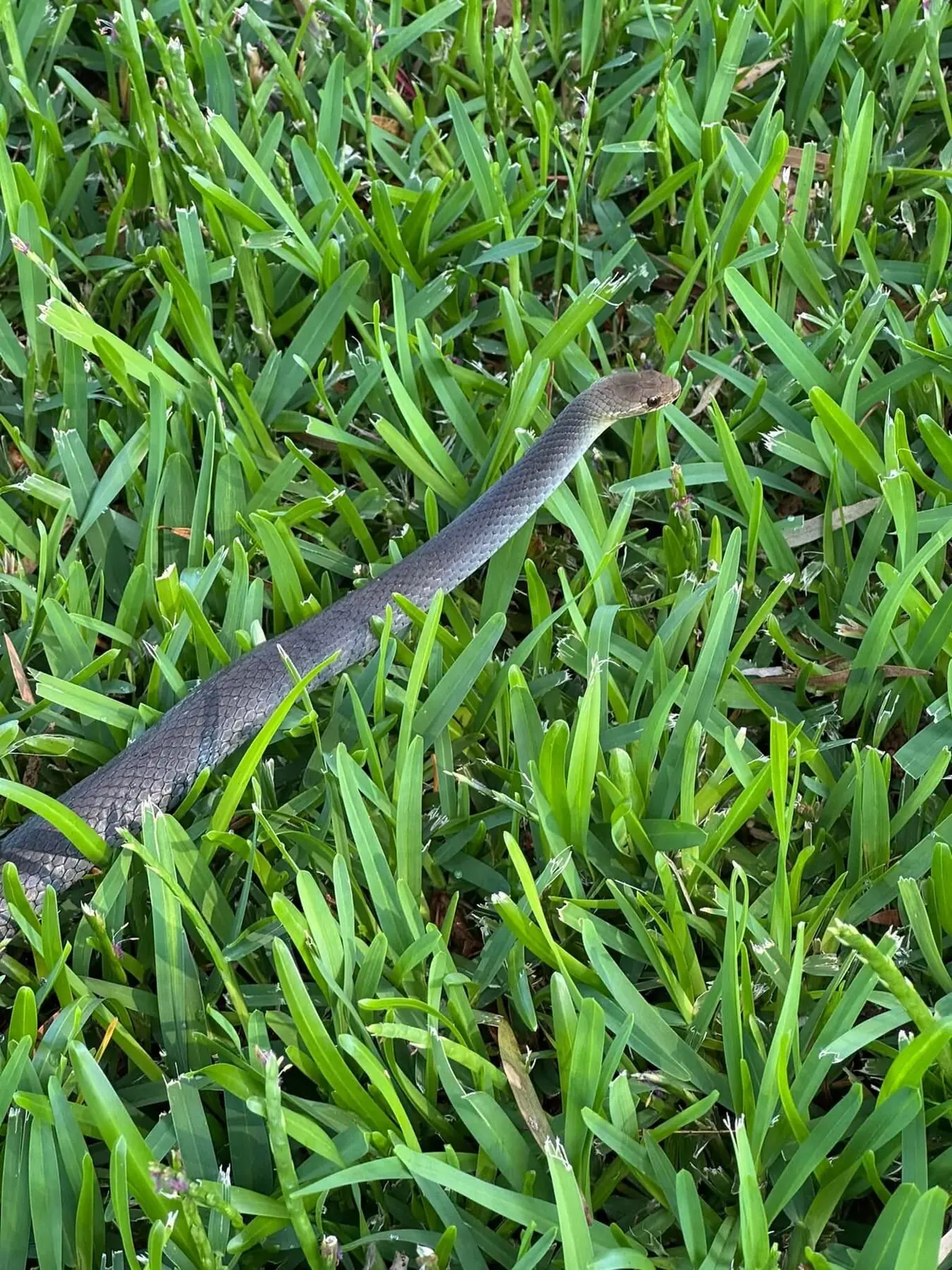
Photo supplied by Wollongong Snake Catchers.
Local status
Found in wet ground across the region — creek banks, lagoon edges and soggy lawns.
- Typical size
- Usually 50–70 cm.
- Venom
- Mildly venomous
- Local status
- Confirmed local species
Identification
- Olive-green, brown or black back.
- Two thin white or cream lines on the side of the head — one above the lip, one from the eye.
- Dark grey to black belly.
Colouring & markings
Plain dark body; the pale facial stripes are the key feature.
Habitat
Swamps, creek margins, damp grassland and wet gardens.
Around Wollongong
Lake Illawarra foreshores, Bellambi Lagoon, Minnamurra River flats and wet backyards near drainage lines.
Behaviour & temperament
Active during the day and at dusk; feeds largely on frogs and skinks. Usually flees.
Venom classification
Mildly venomous. Regardless of species, never handle a snake. If anyone is bitten, call 000 and apply a pressure immobilisation bandage.
If you encounter one
- 01Move people and pets away calmly. Keep at least a few metres between you and the snake.
- 02If it is safe to do so, keep watching it from a distance so you can tell the catcher where it went.
- 03Never try to catch, corner, hit or kill it. Most bites happen during these attempts.
- 04Call 0428 458 856 and describe where it is and what it looks like.
When to call a professional
Call if it is indoors or confined in a pool area. It is easily mistaken for a juvenile red-belly.
Often confused with
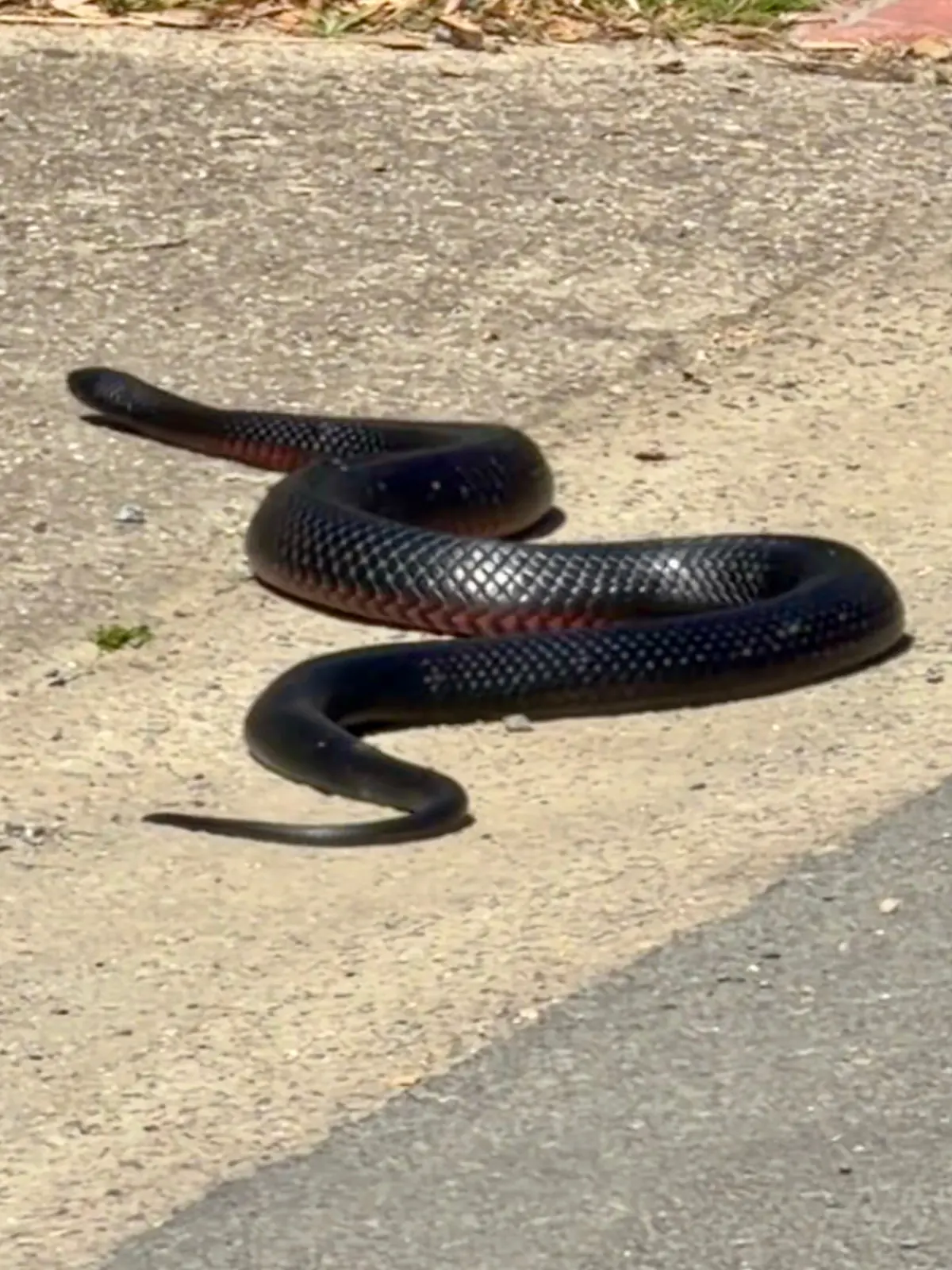
Red-Bellied Black Snake
Pseudechis porphyriacus
Glossy black above with crimson to pink lower flanks. Shy and usually keen to escape, but venomous and never to be handled.
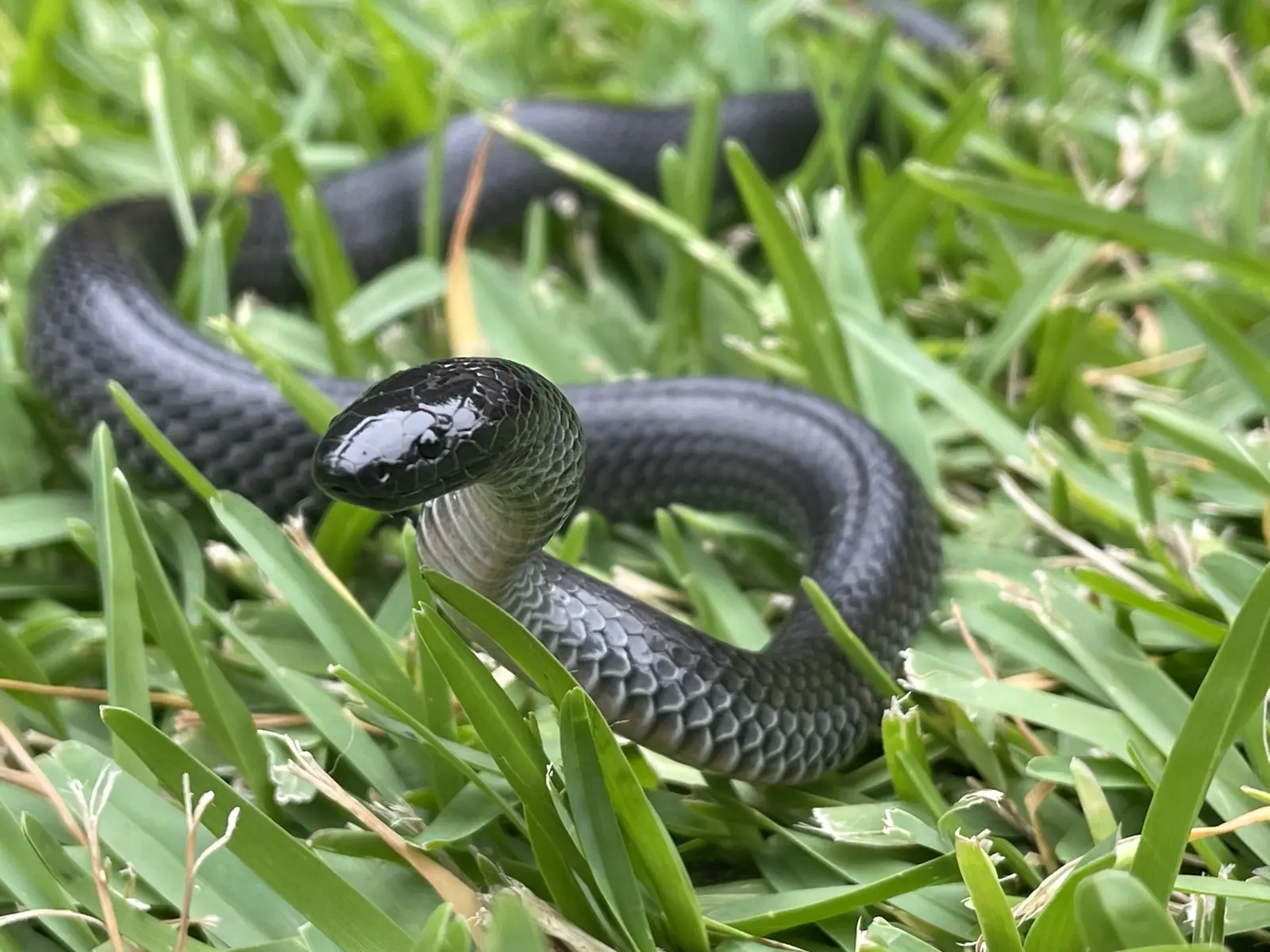
Small-Eyed Snake
Cryptophis nigrescens
Glossy black with a pink or cream belly and tiny dark eyes. Often confused with a young red-bellied black snake.
Frequently asked questions
Is a marsh snake dangerous?
It is regarded as mildly venomous. Bites are uncommon but can cause local symptoms; seek medical advice after any bite.